Your DNA stays the same. You don’t.
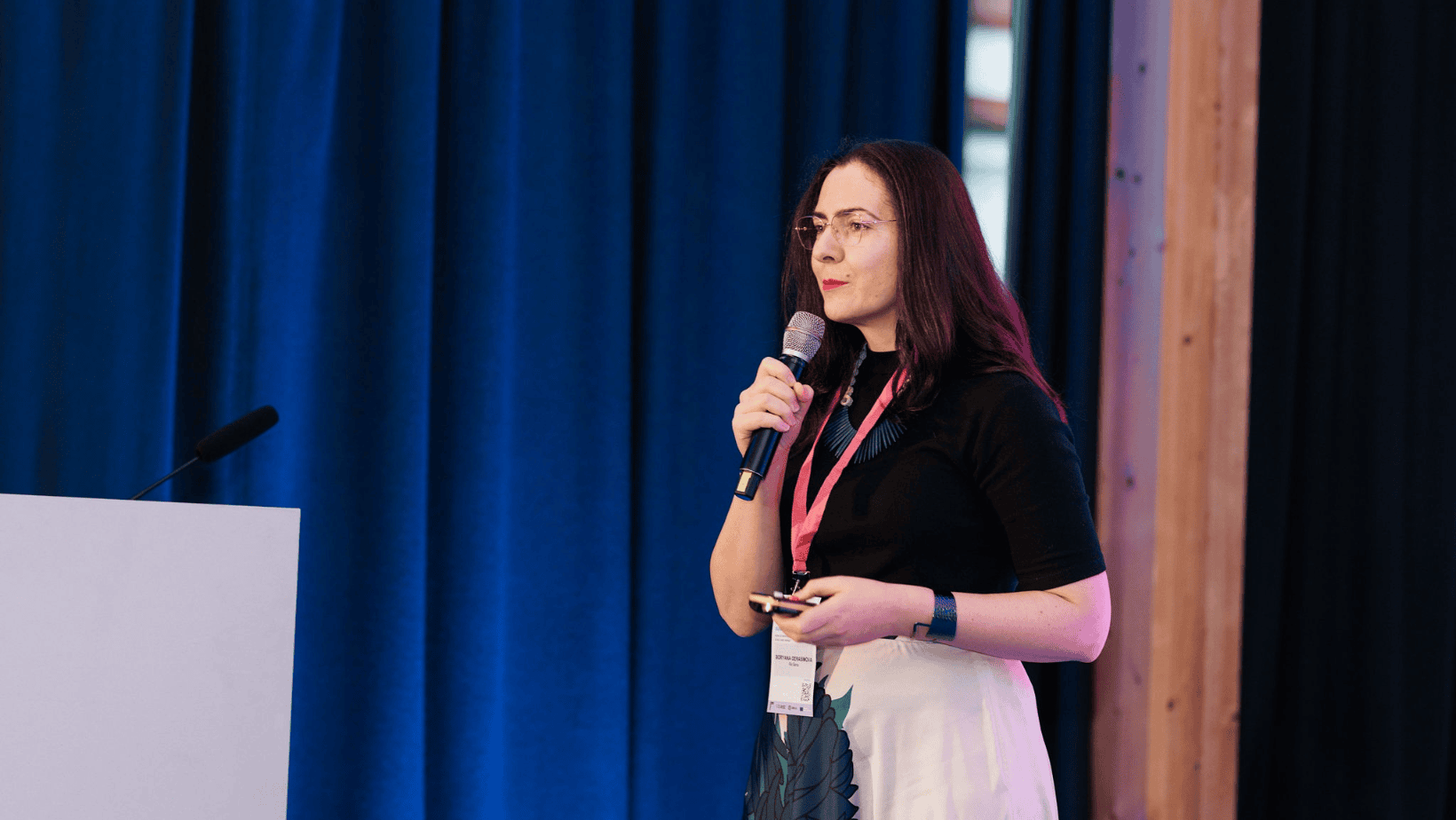
Boryana Gerasimova, Founder and CEO of Re:Gena
Re:Gena is building a clinical platform that lets doctors reinterpret a patient’s existing genetic data whenever their health or goals change.
Our DNA stays largely the same throughout our lives. However, almost everything else changes: our age, health, hormones, lifestyle and goals. As we change, the same genetic information can answer new questions about our health and lead us with insights we can’t get from any other test. I believe this is the baseline for preventative medicine and we should be able to return to it throughout life for updated, personalized and highly effective guidance.
For me, this is also personal.
When cancer changed my plans
At 26, while building a career in IT, I was diagnosed with Hodgkin’s lymphoma. After a year of grueling treatment, I was fortunate to recover, but surviving cancer changed my whole perception towards health.
I had to rebuild my health from scratch, and I wanted to know how to stay well and reduce the risk of the cancer returning, based on my own biology and what I had gone through, rather than general advice. That search eventually changed my career. I left IT for disease prevention and in 2014 I became one of the early pioneers of personalized preventive medicine in Bulgaria. In 2018, I founded Re:Gena, combining genetics, advanced testing and multidisciplinary medical expertise.
Eight years later, technology brought me back to my roots.
We generate genetic data. We rarely reuse it for prevention.
Genetic testing is sophisticated, yet much of its data goes unused. Genomes and exomes are mostly interpreted for one diagnostic question, preventive panels each cover one area of health, and consumer reports list associations without clinical priorities. Newer platforms add biomarkers and lifestyle questionnaires to tailor the advice, but the genes they examine are fixed in advance, not chosen from the person’s medical history.
Meanwhile, more and more people already hold whole-genome or exome data, from longevity clinics and consumer services. In Bulgaria, there are very few medical geneticists to interpret it.
Take a typical scenario from our practice. A woman in her early thirties is preparing for pregnancy and wants to optimise her health and nutrition. Her genes can be interpreted for folate metabolism, micronutrients and diet. Years later, in perimenopause, she needs a deeper look at how she metabolises hormones, her changing metabolic health, osteoporosis risk and cognitive health. Until now, that meant hours of a medical geneticist’s work starting again, and usually a new test for additional genes. Her DNA had not changed, only her question had.
Value, over a lifetime
The idea behind our EPIC-X project came from a Value-Based Healthcare course I completed shortly before the programme. Value-Based Healthcare defines value as the outcomes that matter to patients, relative to the cost of achieving them across the full cycle of care.
In genetics, that cycle is a lifetime, and when applied to genetics, this means the patient’s goals and overall heath history, not only the test panel or the practitioner recommendation, should decide what is interpreted. The report should contain findings a clinician can act on. And existing data should be reused before cost increases, e.g new tests, supplements or interventions are added.
Starting with the patient, not the panel
We built on these principles and they became the foundation of our Interpretation Intelligence Platform. Re:Gena was selected for the EPIC-X Acceleration+ Programme as one of 20 women-led deep-tech startups from 128 eligible applications across 16 European countries, and the only company from Bulgaria. With six months and equity-free funding, we turned more than a decade of clinical experience in personalized and preventative medicine into a working prototype.
The key difference is where the analysis begins, instead of starting from a predefined panel or thousands of variants, the platform starts with the patient: their medical history, current concerns and goals. These determine which genes are relevant and which findings to prioritise. When their life changes, the medical geneticist can return to the same data with a new perspective.
The platform works with data people already have, from different providers and formats, from whole genomes to PCR panel reports. It records health information in standard medical terminologies, so one structured record can serve the dietitian, the cardiologist and the gynaecologist, and later support the measurement of outcomes.
It also gives particular attention to women’s health. Women’s biology has long been under-represented in how genomic results are interpreted, so the platform supports sex-specific interpretation and includes a dedicated hormone-metabolism profile.
Practitioners, clinics, laboratories and test providers can offer a new service built on data their patients already hold: ongoing, personalized genomic interpretation that supports prevention and longevity plans, without building in-house genetics or bioinformatics expertise.
Challenging, and worth every effort
The EPIC-X journey was intense. Six months is very short to build a deep-tech prototype alongside coaching, masterclasses and other programme activities, especially as a solo founder already running a healthcare business.
It was, however, also one of the most valuable experiences of my career, and it changed how I run the company. Coaching helped me map our regulatory pathway early, define how we will evaluate the AI, and plan our move from expert-led services to a product.
For a female founder, it was very empowering and validating. I particularly remember a masterclass with Professor Helen McCarthy, Chair of Nanomedicine at Queen’s University Belfast and an accomplished
biotech entrepreneur: “Speak truth and divide rooms. The ones who are on your side will join.” Her advice was to surround ourselves with authentic people who recognise our potential and value integrity above anything else. Having experienced my share of difficult partnerships, I took her words to heart.
Just as important were the other women building deep-tech companies across Europe. Hearing successful founders speak openly about funding and partnerships showed me that, as a solo founder, I was not facing these challenges alone.
The next chapter
EPIC-X marks a turning point for Re:Gena. We began by helping individual patients understand their genetic information and act on it. Now we are building technology that can help many more healthcare professionals and clinics deliver that value.
Next, we will pilot the platform within our medical center with partner clinicians, run a formal evaluation and establish our regulatory pathway. Our longer-term ambition is to make personalised genomic interpretation accessible to clinicians and patients across Europe, while ensuring that technology supports, rather than replaces, medical expertise.
I would welcome conversations with clinics and clinicians who want to pilot it, laboratories and test providers interested in integrating it, and investors and funding partners who share our commitment to evidence-based prevention and responsible healthcare AI.
And to other women considering entrepreneurship in deep tech, I would share the lesson that stayed with me most strongly from EPIC-X: be courageous about your vision, uncompromising about your values, and intentional about the people you build with.
Innovation takes scientific knowledge, technology and resources. But it also takes people who believe in what you are trying to change.
Your DNA stays the same. You don’t. Your genetic report shouldn’t either.
This article was written in collaboration with Re:gena. For more information about their work visit Re:gena’s website.
Find out more about the project here!